PRODUCTION NOTE
METROPOLIS BEYOND CINESTREAM LIVE 2026
"Cinestream Live" is a coined term that expresses the concept of delivering a digitally remastered and re-edited version of Fritz Lang’s Metropolis—originally screened 100 years ago with a full live orchestra accompanying the silent film—paired with a live techno music performance.
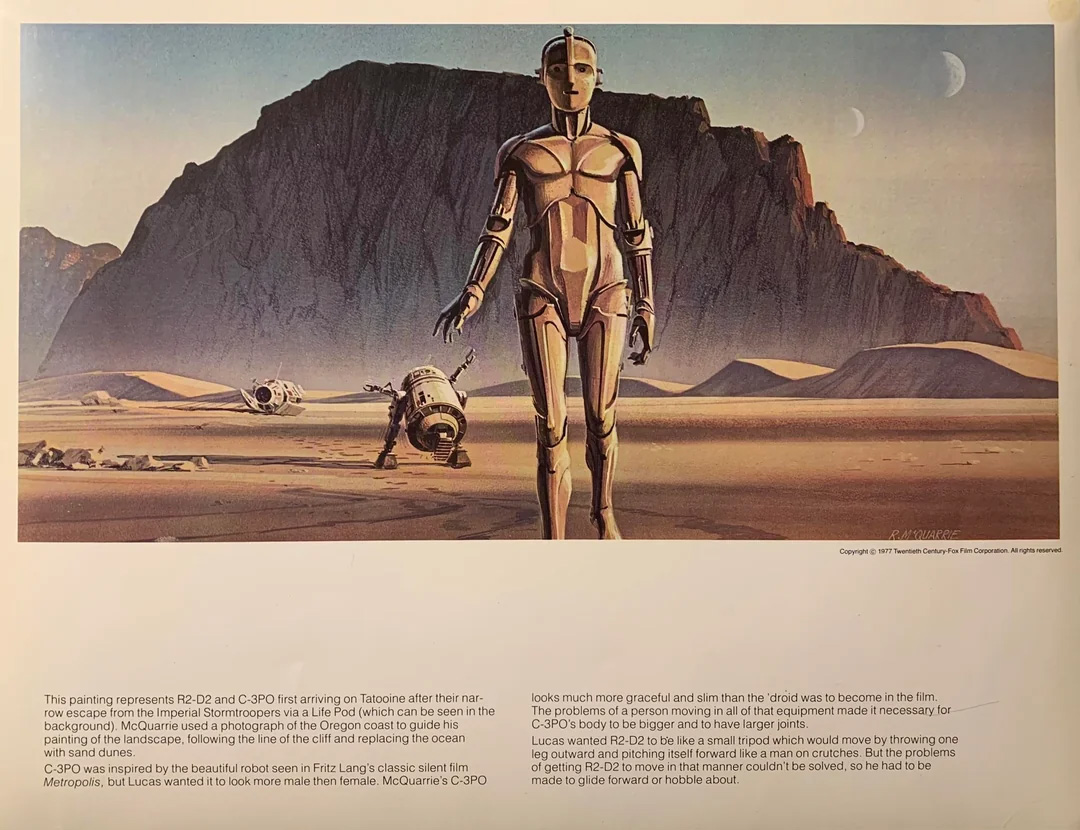
Ralph McQuarrie’s conceptual art from The Star Wars Portfolio
Cam Lasky first learned about Metropolis through the caption in Ralph McQuarrie’s conceptual art book The Star Wars Portfolio, which he acquired around the 1977 release of Star Wars. The caption mentioned that the early design of C-3PO was inspired by the robot from Metropolis. He also saw comparison photos between the robot and C-3PO in the sci-fi magazine Starlog at the time.
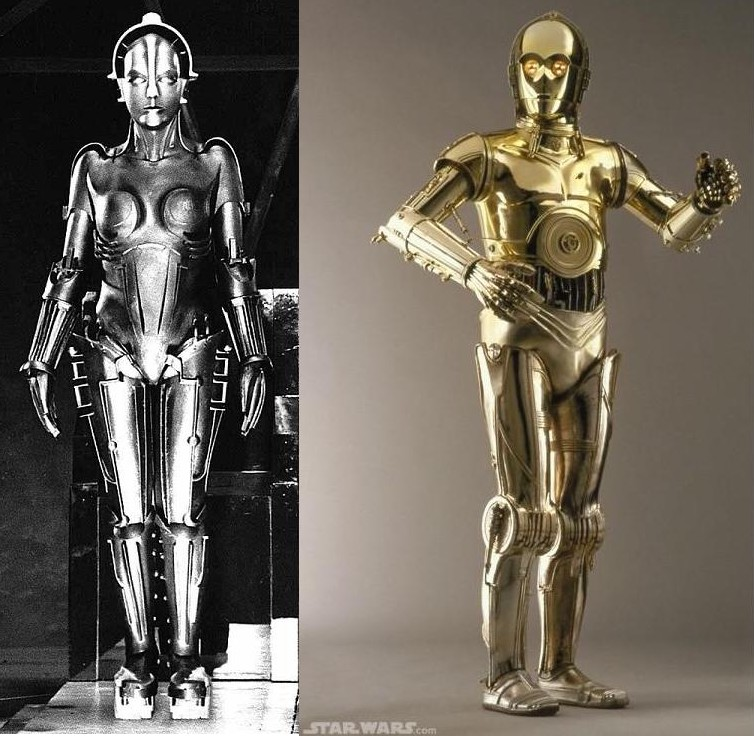
Metropolis Robot vs C-3PO
Giorgio Moroder’s Metropolis (1984)
He was particularly struck by the fresh surprise and interest of overlaying modern music onto a silent film. It was not merely a restoration of a masterpiece, but a transformation of its sonic aesthetics and a regeneration of its legacy. Although he was aware of Jeff Mills’ 2000 version, which synchronized music to the scenes, and the 2023 Cinemix project, what directly inspired Metropolis Beyond was the numerous homages to Metropolis scattered throughout Yorgos Lanthimos’s film Poor Things (2023).
Yorgos Lanthimos “Poor Things” (2023)
The film was released in Japan in January 2024.
For Cam Lasky, that year marked a major shift in his production style—from deep dubstep to techno. As he explored the significance of Metropolis in his new musical direction, time passed quickly. By the end of 2025, he decided to pursue this project as a new challenge.
This is neither a conventional film nor a VJ-style approach like Jeff Mills’ work. Metropolis Beyond began as a project that pursues the value of “art to be freely appreciated”—something that people in an installation space or collectors who own the work can encounter at any moment that catches their eye, or at a time of their own choosing.
“While working on the sound for Metropolis Beyond, I recalled Abel Gance’s silent film Napoleon, which Francis Ford Coppola revived and which I saw during my adolescence. This memory greatly expanded the concept of Metropolis Beyond,” Cam says.
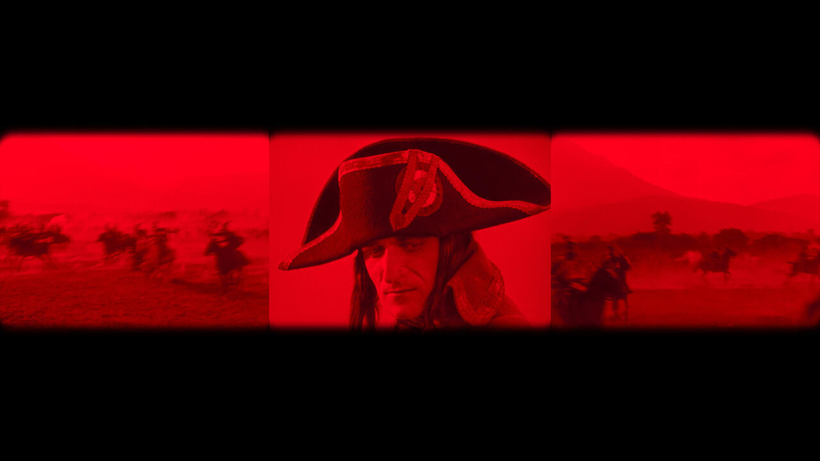
Francis Ford Coppola’s restored “Napoleon” (1981)
The shocking memory of experiencing that Napoleon (a silent film with live musical accompaniment!) during his boyhood directly led to the concept of “Cinestream Live”—the fusion of a live performance with a fully re-edited version of Metropolis Beyond.
Cam also reflects on another important inspiration for the project:
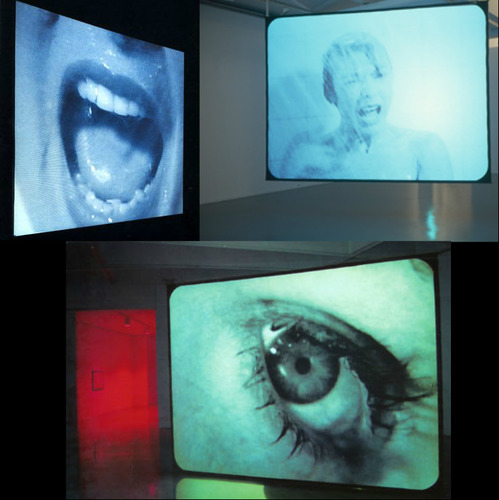
Douglas Gordon “24 Hour Psycho”
Metropolis Beyond also uses a digitally remastered image, but the editing is different from both Giorgio Moroder’s 1984 version and the 2010 Complete version. While paying respect to Fritz Lang, I aimed for an expression appropriate for the speed and sensibility of 100 years later. The ending also follows the form that Fritz Lang is said to have originally envisioned. Exploring the intersection with contemporary art without completely destroying the form of a film—this is both the motivation and the core of this live project.”
METROPOLIS BEYOND Cinestream Live will be delivered in a two-screen format: the film and live footage.